
French Drain Installation in Houston, TX
Professional French drain (gravel and pipe drain) installation built for Houston's flat clay lots, so your yard can dry out after heavy rain.
- Free estimate and a clear, written price
- Professional installers
Quality and Customer Satisfaction Come First!
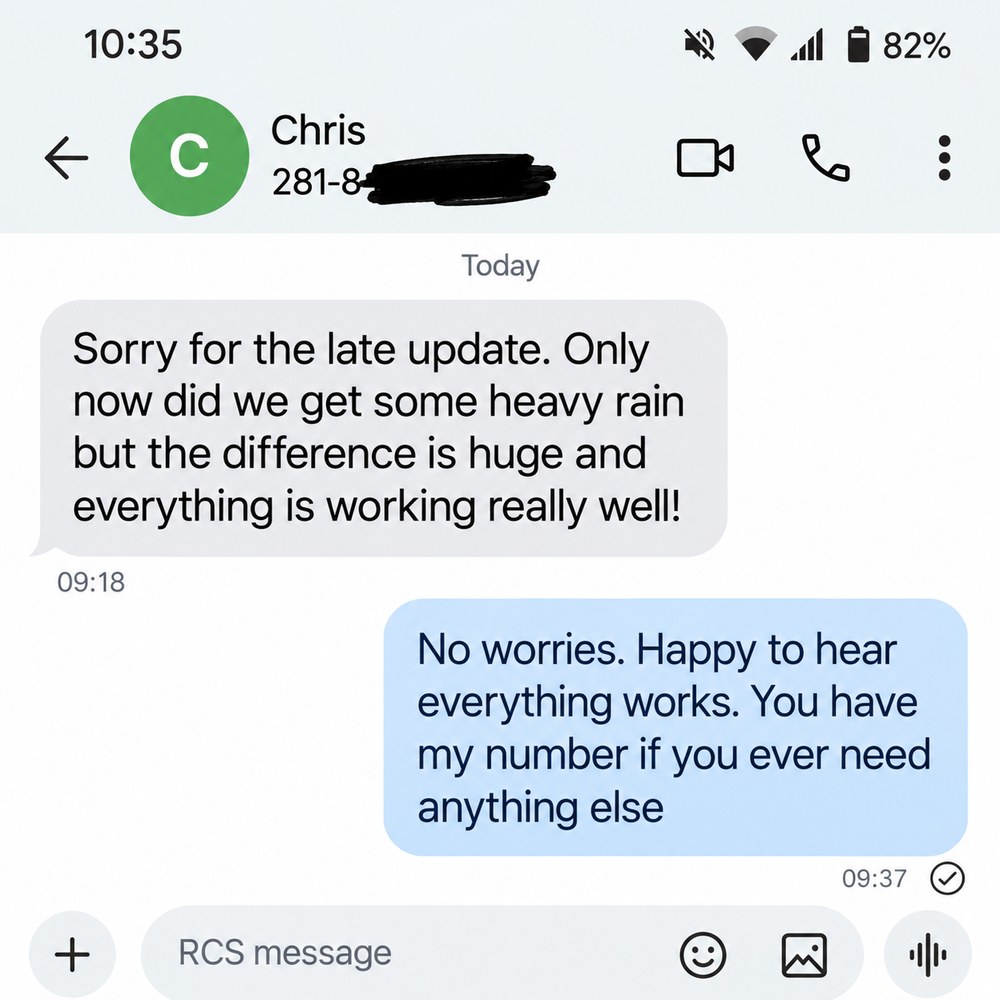


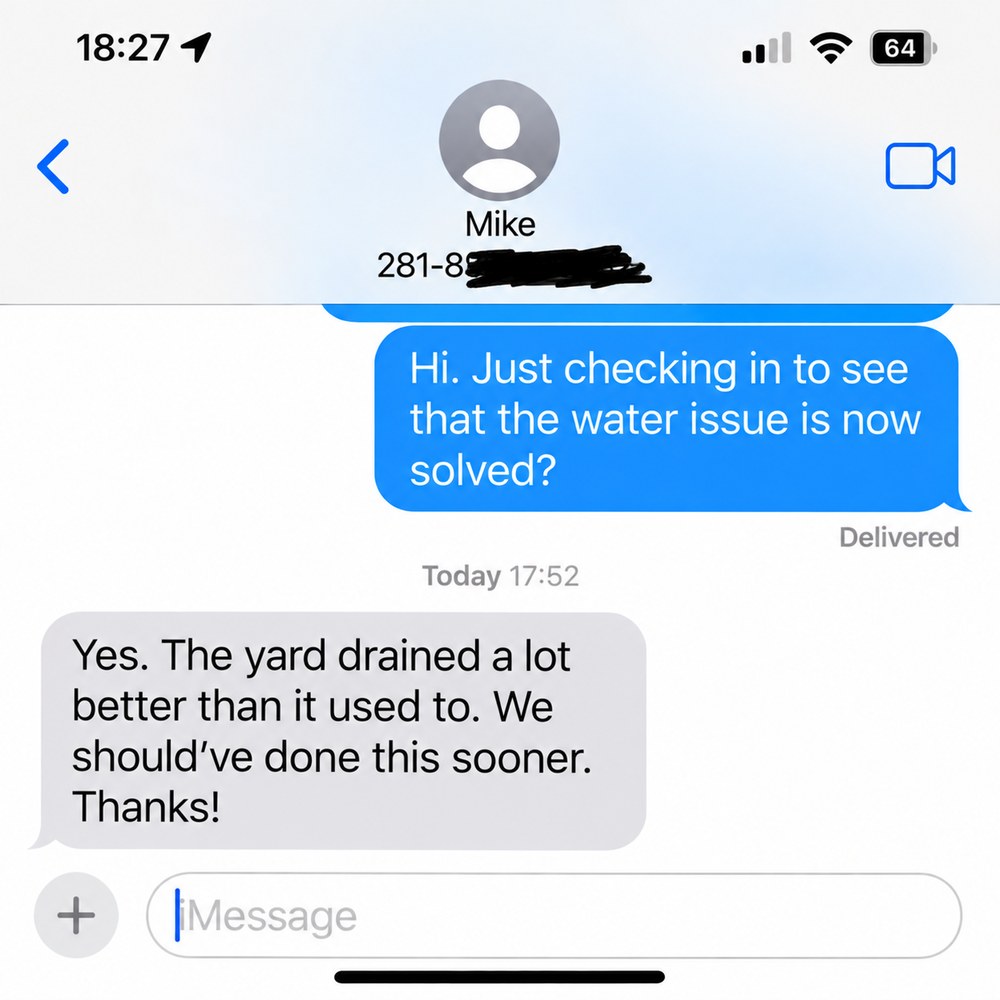


Drainage Services
Almost every drainage problem in Houston has a fix, and the right one depends on where the water comes from and where it can go. The services below cover French drains, repairs, yard and driveway drainage, and foundation drainage. They also cover sump pumps (pumps that push water out when it cannot flow downhill). Downspouts (the pipes that bring rain down from the gutters) and grading (reshaping the ground so it slopes) are covered too. So are catch basins (boxes in the ground with a grate on top).
French Drain Installation
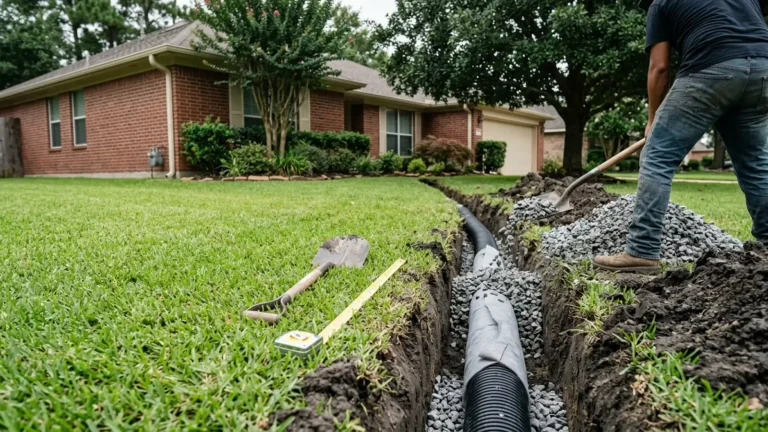
A French drain (a gravel trench with a pipe at the bottom) collects water under the lawn. It carries the water to an outlet (the spot where the water leaves). In Houston clay it is dug deeper and lined with filter fabric (cloth that keeps soil out).
Sump Pump Installation
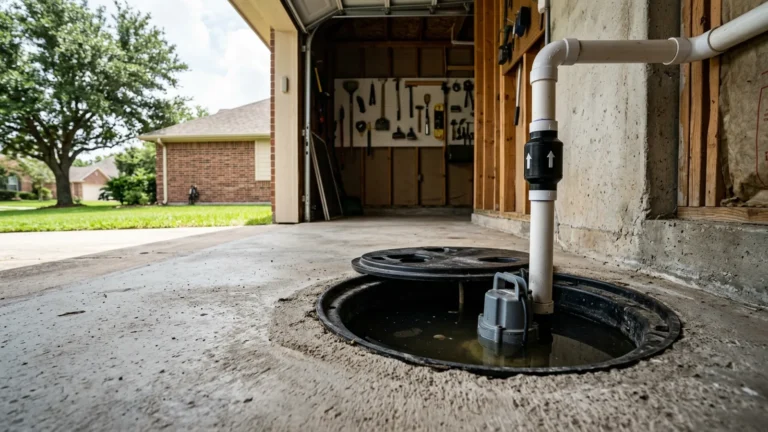
On a lot too flat for water to flow away, a sump pump lifts it. Water collects in a small pit. A float switch (a switch that floats up as the water rises) starts the pump, which sends the water to a safe spot.
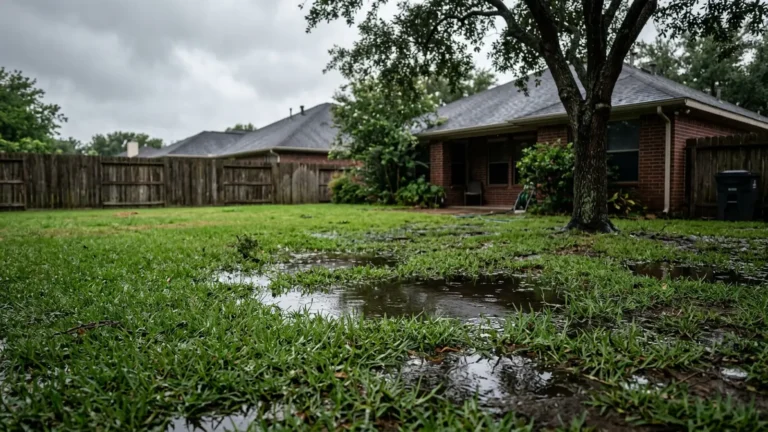
Yard Drainage
When the whole lawn stays soggy for days after rain, yard drainage fixes the cause. The installer finds where the water sits and where it can leave, then plans drains, grading or both, so the grass can dry out again.
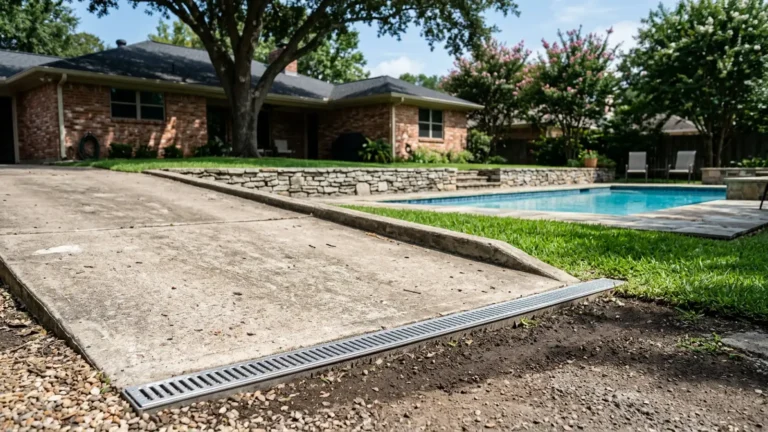
Driveway and Patio Drainage
Rain runs off driveways and patios fast, often toward the garage or the house. A channel drain (a long, narrow drain with a grate) can run along the edge. A catch basin catches water at the low spot.
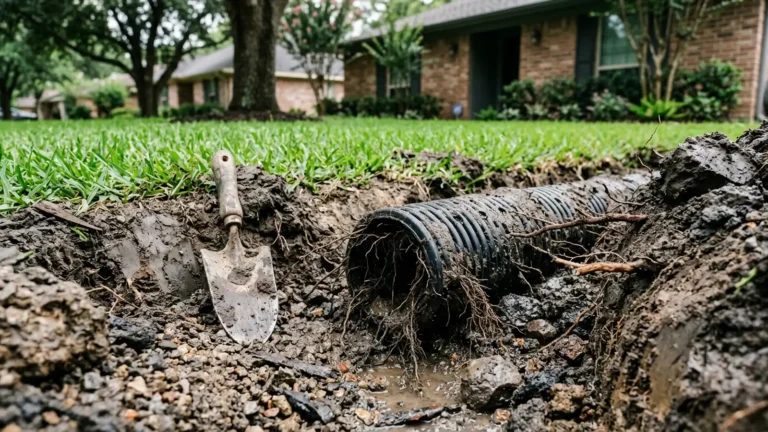
Drainage Repair
When an old French drain or yard drain stops working, the cause is often one blocked, crushed or buried part. Drainage repair finds that part and fixes it, often without digging up and replacing the whole drain line.

Downspout Drainage
One inch of rain sends over 600 gallons off a 1,000 square foot roof. A downspout often drops all of that water right beside the house. Solid underground pipe carries that water safely away.
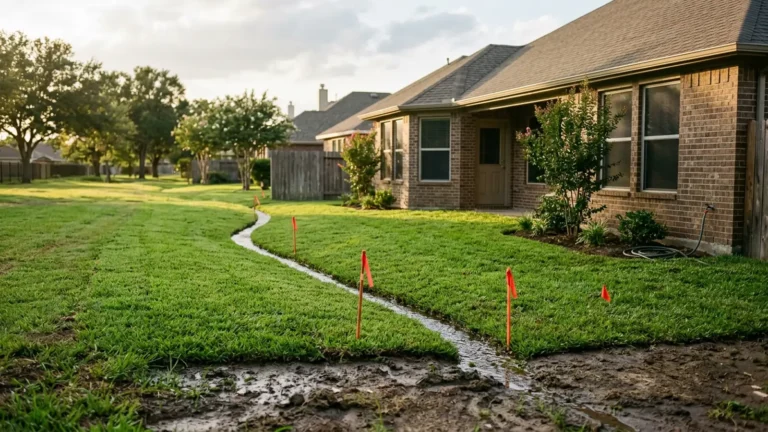
Yard Grading and Erosion Control
When the ground slopes toward the house or soil keeps washing away, the fix is grading. Swales (shallow, grassy ditches) can also steer surface water safely around the house.
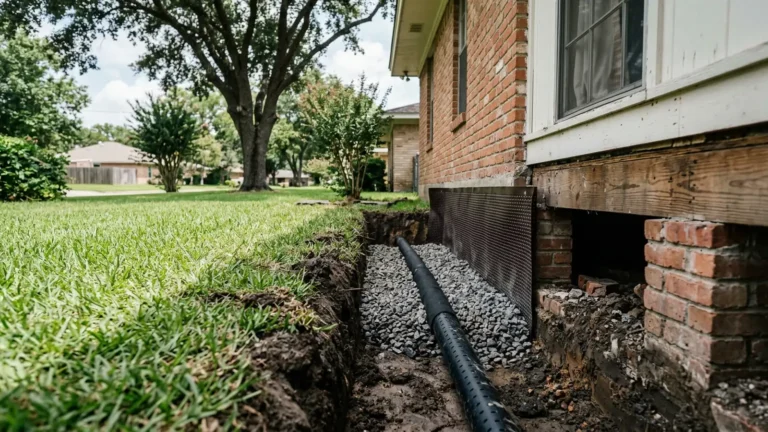
Foundation and Crawl Space Drainage
Older raised homes have a crawl space (the low, open space under the floor) where water can collect. Drains around the house and a sump pump keep that space dry, which protects the floor and the wood above it.
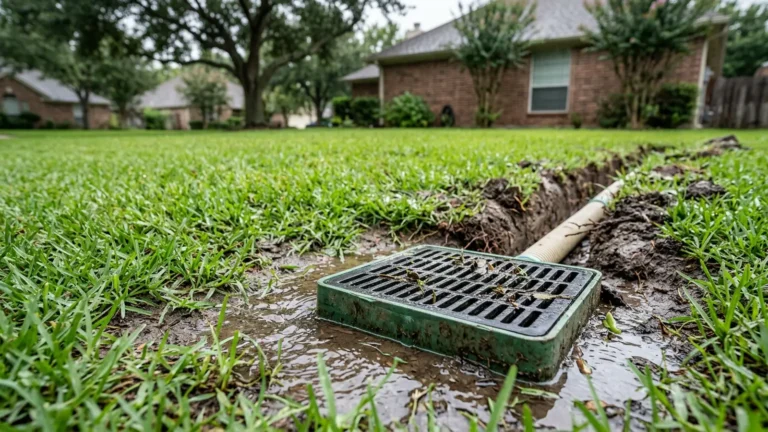
Catch Basins and Channel Drains
Some water problems sit in one spot, like a low corner, a driveway edge or a pool deck. A catch basin or a channel drain collects the water right there. Solid pipe then carries it to a safe outlet away from the house.
Why do so many Houston yards flood after rain?
Houston yards flood because heavy bursts of rain fall on flat land made of dense clay, so the water has nowhere to go.
Heavy bursts of rain
Bush Intercontinental Airport gets 51.84 inches of rain a year. A heavy storm (the kind that has a 1 in 10 chance of happening each year) can drop 8.74 inches in one day.
Sticky clay soil
Most of the city sits on gumbo (sticky grey-black clay). It swells when wet and closes up, so rain soaks in very slowly.
Very flat land
Much of Houston is so flat that rain runs off slowly. It stays on the lawn and against the house for days.
What a good drain gives you
A yard that dries out
Water leaves through the pipe instead of sitting on the grass for days.
Less water against the house
Rain is carried away from the house instead of soaking the clay beside it.
A drain that is easy to care for
A cleanout (a pipe with a cap that can be opened) lets the drain be flushed instead of dug up.
How is a French drain installed?
A French drain is installed in four steps. First, the installer digs a sloped trench. Second, the trench is lined with filter fabric. Third, a perforated pipe (a pipe with small holes) is laid in clean gravel. Fourth, the pipe is led to an outlet. After that, rain seeps into the gravel, enters the pipe and flows away. In Houston clay, the trench is dug extra deep. The depth, the fabric and the slope decide how well it works.
Where does the water go on a flat Houston yard?
Every French drain needs a place to send the water, called the outlet. On a flat Houston yard, the installer picks one of three ways. The water can run to the street or a ditch if the ground slopes down even a little. It can soak into a dry well (an underground pit filled with stone). Where it cannot flow downhill at all, a sump pump lifts it away. In clay, a downhill outlet or a sump pump usually works best.
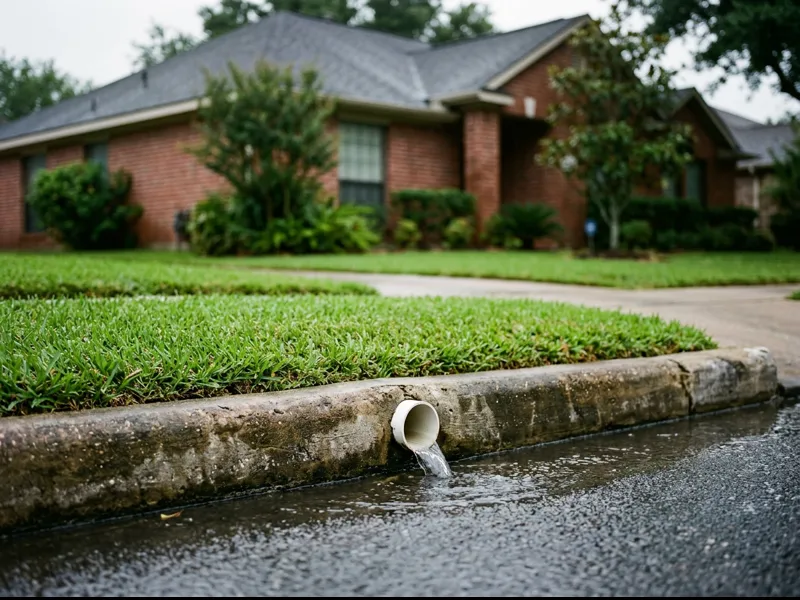
To the street or a ditch
The pipe slopes down at least 1 inch for every 8 feet, leading to an opening in the street curb or to a ditch.
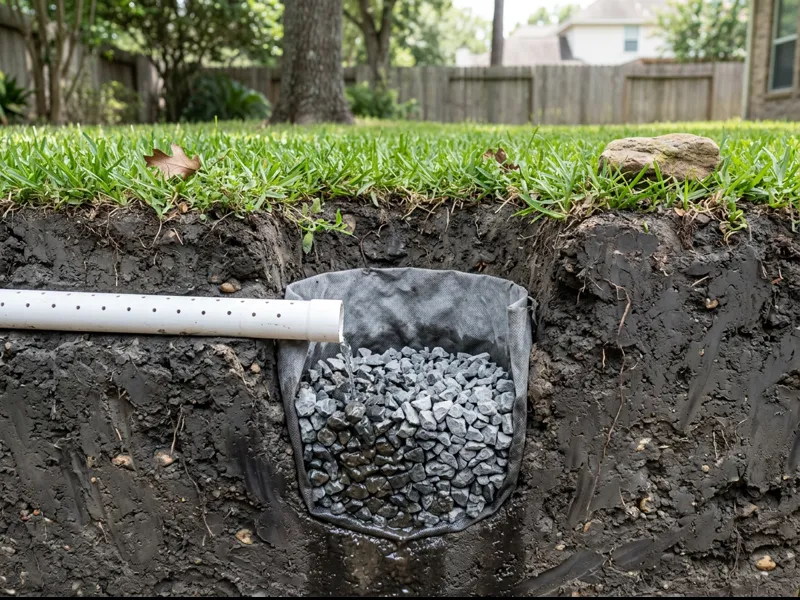
Soaking away in a dry well
Water soaks away underground, but only where a test hole (a hole filled with water to see how fast it drains) empties within 4 hours.
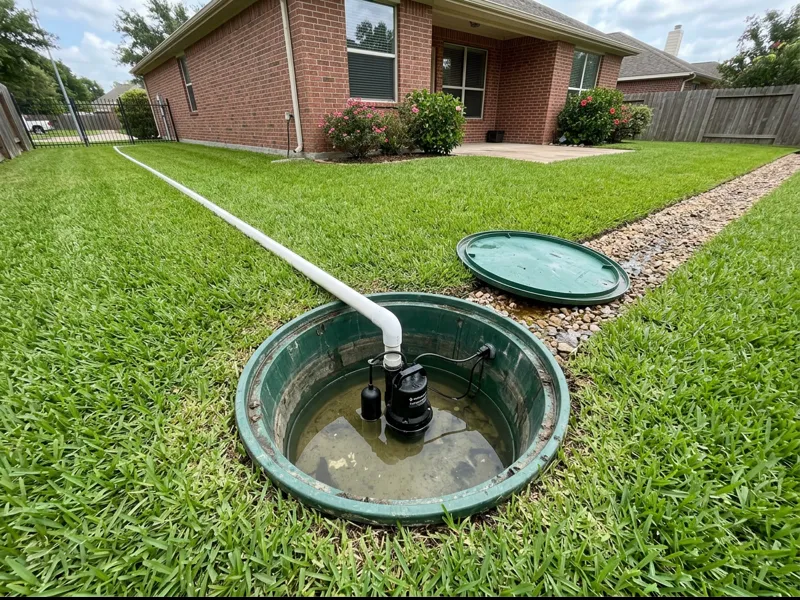
Out with a sump pump
Where there is no slope, a small pump lifts the water out after each storm.
What should a professional French drain quote include?
A professional French drain quote (the price the installer writes down) names the trench depth, fabric, pipe, slope, outlet and clean-up of soil and lawn.
The full checklist, with typical prices, is on the French drain installation cost page, and more help is in the Houston drainage guides.
FAQ
Common French Drain Questions in Houston
Ready for a dry yard after the next storm?
Get a free estimate, with no need to hire anyone: call now or book a free drainage assessment online. An installer looks at your yard and then gives you a written price. Installers work across Greater Houston; read more about Houston French Drain.